Date: January 6, 2026 Author: [Your Name/Blog Name]
It is the first week of 2026, and we have already witnessed a geopolitical earthquake that has redefined power dynamics in the Western Hemisphere overnight.
If you were offline this past weekend, you missed a scenario straight out of a political thriller. In a lightning-fast, high-stakes operation, the decade-long rule of Nicolás Maduro in Venezuela came to a sudden end—not via an election or an internal coup, but through direct intervention by United States special forces.
The dust is still settling, but the implications are massive, stretching from Caracas to New York, and directly impacting global energy markets. Here is a breakdown of the Venezuela bombshell and what it means right now.
The Weekend Operation
Details remain tight, but what we know is that elite U.S. military units executed a surgical extraction operation inside Venezuelan territory over the weekend of January 3rd. Their target was President Nicolás Maduro.
The operation was successful. Maduro was secured and immediately flown out of the country. As of today, he is under heavy guard in New York, awaiting trial on severe charges related to “narco-terrorism” and high-level corruption.
The Standoff in Caracas
If the U.S. expected the Venezuelan regime to instantly crumble without its figurehead, they were mistaken. The ruling establishment moved swiftly to fill the vacuum.
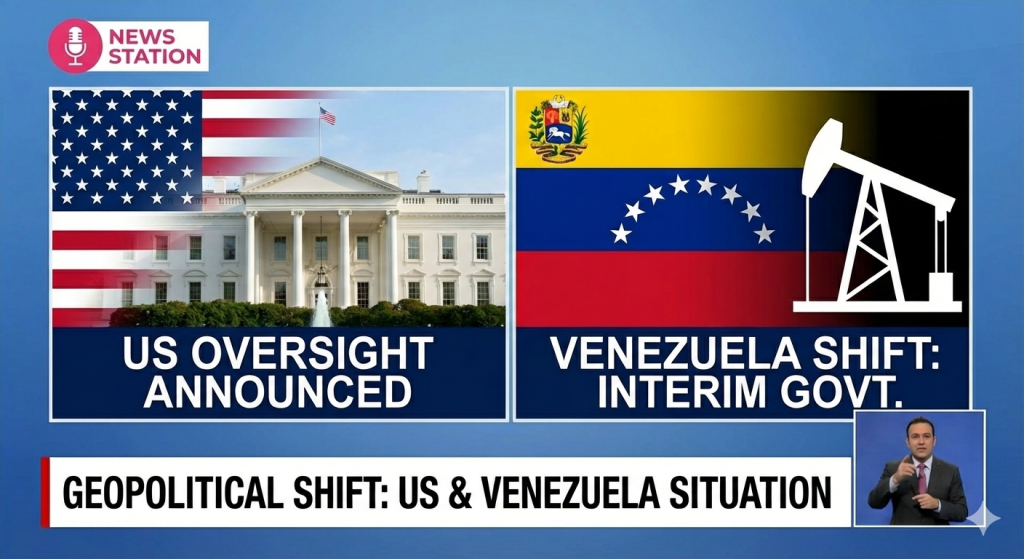
Within hours of Maduro’s capture, the Venezuelan Supreme Court—which remains loyal to the ruling party—appointed Vice-President Delcy Rodríguez as the Interim President.
Rodríguez is a formidable political operator and a staunch Maduro loyalist. Her immediate elevation signals that the regime is digging in. We now face a volatile standoff: The U.S. has removed the former leader, but his recognized successor currently holds the presidential palace, backed by the existing government infrastructure.
The Game-Changer: Trump Eyes the Oil
While the military operation was shocking, President Trump’s subsequent announcement has generated perhaps even more controversy and international debate.
Following the extraction, President Trump declared a two-fold strategy for Venezuela:
- The U.S. intends to provide “temporary oversight” of the country’s operations to ensure stability during this transition period.
- Crucially, he announced that the U.S. would begin tapping into Venezuela’s vast oil reserves.
Venezuela holds the largest proven oil reserves in the world. Trump’s stated goal is to stabilize global energy markets and potentially fund rebuilding efforts. However, critics globally are already characterizing this as a resource grab, raising immense legal and ethical questions about how one nation can assume control of another’s primary natural resource against the will of its sitting interim government.
What We Are Watching Next
This situation is incredibly fluid. Here are the key flashpoints we are monitoring in the coming days:
- The Military Loyalty Test: The critical variable is the Venezuelan armed forces. Will they remain loyal to Interim President Rodríguez and the status quo, or will fractures emerge now that Maduro is gone? The risk of internal conflict or civil unrest is extremely high.
- The Superpower Response: Maduro’s regime was heavily backed by Russia and China, acting as both political allies and major creditors. How will Moscow and Beijing respond to this direct unilateral action by the U.S. in what they consider their sphere of influence?
- The Market Reaction: Oil markets are already reacting to the news. The prospect of Venezuelan oil freely flowing back onto the market under U.S. direction could crash prices, affecting economies globally.
This is history in the making. We went to bed in one world and woke up in another. Stay tuned as we continue to cover this developing story.